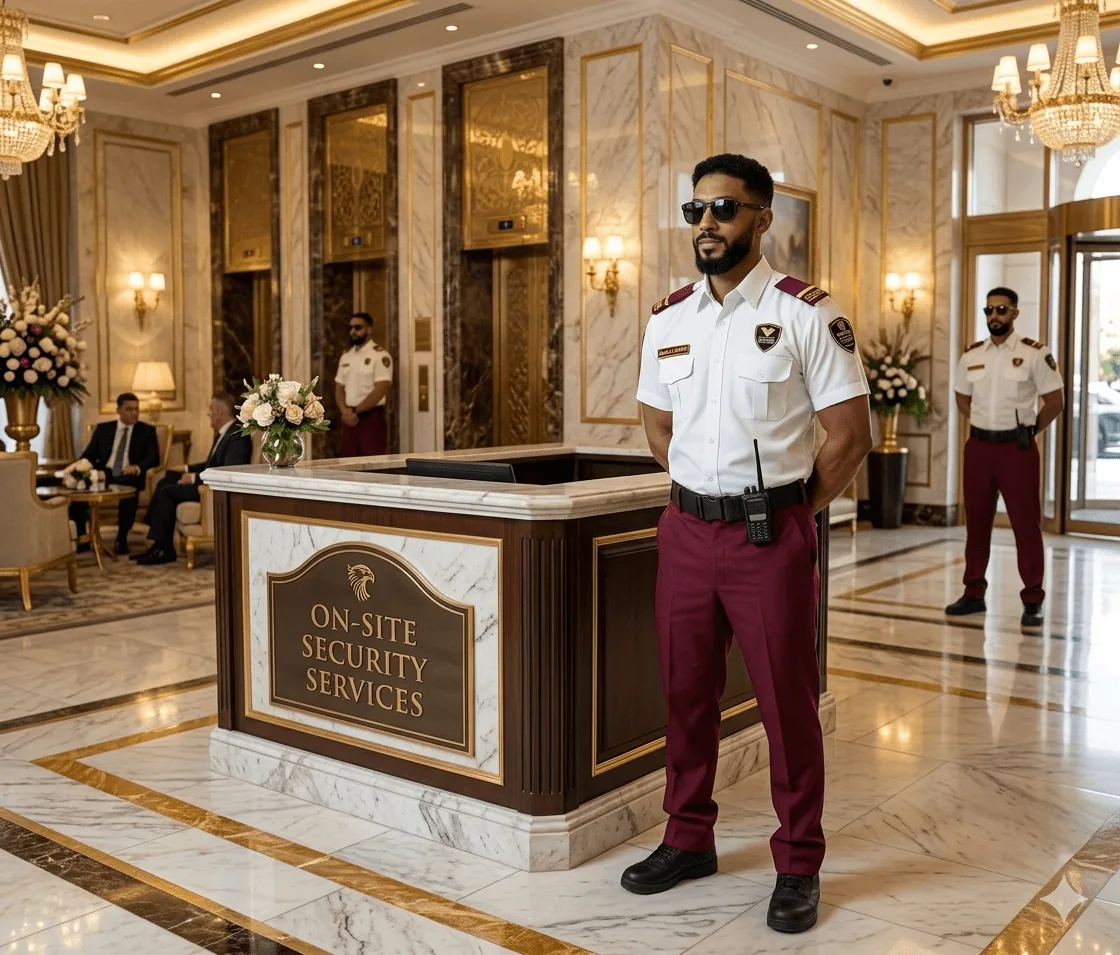
What Makes On-Site Security Different from Manned Guarding
🏢 On-Site Security vs Manned Guarding — The Practical Difference
On-Site Security Guards are embedded in your facility operations — they know your site, your staff, and your emergency procedures. They are the first call when something happens. Manned Guarding is the B2B manpower model — structured shift deployment with compliance documentation for organisations that need to outsource security headcount. On-Site is for facility integration; Manned Guarding is for contract manpower supply.
Manned guarding is a manpower contract. On-site security is a facility integration model. Where manned guarding provides a certified guard count against a compliance brief, on-site security guards are embedded into your facility's operating procedures — they know the building layout, the staff, the shift change patterns, the emergency exits, and the specific risk profile of your site.
This distinction matters when something goes wrong. A guard deployed against a generic brief will follow a generic protocol. A guard embedded in your facility operations knows which door to lock, which supervisor to call, which area to clear, and which emergency services contact is pre-cleared for your site.
Who to Call — On-Site Guard as Your First Emergency Contact
On-site security guards function as the facility's primary emergency coordination point outside of office hours. They hold the duty manager's contact, the building systems manuals, the pre-authorised emergency service contact list, and the facility's incident escalation procedure. When the fire alarm activates at 3am, the on-site guard coordinates the evacuation, confirms the zone, calls the duty manager, and meets civil defence at the perimeter gate. This is not a manned guarding function — it requires facility-embedded knowledge that only develops over time at your specific site.
Security Guards Embedded in Your Facility Operations — Not Deployed Against a Generic Brief
On-site security guards are not interchangeable with general manned guarding. Where manned guarding provides licensed officers following standard security protocols, on-site security integrates the guard into your facility's own operational structure — your access control procedures, your emergency response chain, your visitor management system, your FM team's communications. The guard is not a third-party vendor standing at the gate; they are a functional part of how your site operates.
This distinction matters in facilities where security decisions interact directly with site operations: a hospital where a guard's access control affects patient flow, a factory where an emergency evacuation requires coordination with the production supervisor, a university campus where the guard is the first point of contact for student welfare incidents. Generic deployment fails in these environments. Facility-integrated deployment succeeds.
How On-Site Deployment Works
- Pre-deployment site survey — our supervisor walks every post, identifies vulnerabilities, maps access points, and documents your existing security gaps before writing a single SOP
- Custom SOPs for your facility — not adapted templates: procedures written specifically for your site, your access levels, your emergency contacts, and your incident categories
- Emergency escalation integration — the guard's emergency response chain is mapped to your facility's own emergency plan; police, fire, medical, and FM contacts are embedded in the post SOP
- Dedicated post assignment — the same officer covers your site long-term, learning your staff, your rhythms, and your risks
- FM team coordination — guards operate as a named point of contact within your facility management communications structure, not a separate siloed service
- Emergency evacuation planning and drills — we participate in your evacuation planning and conduct periodic drills to ensure the guard's role is embedded in the procedure
💰 View transparent pricing — from SAR 3,500/month per guard. No hidden fees.