
On an energy asset, the guard is a safety function before he is a security function — and the loss that matters is not theft, it is downtime.
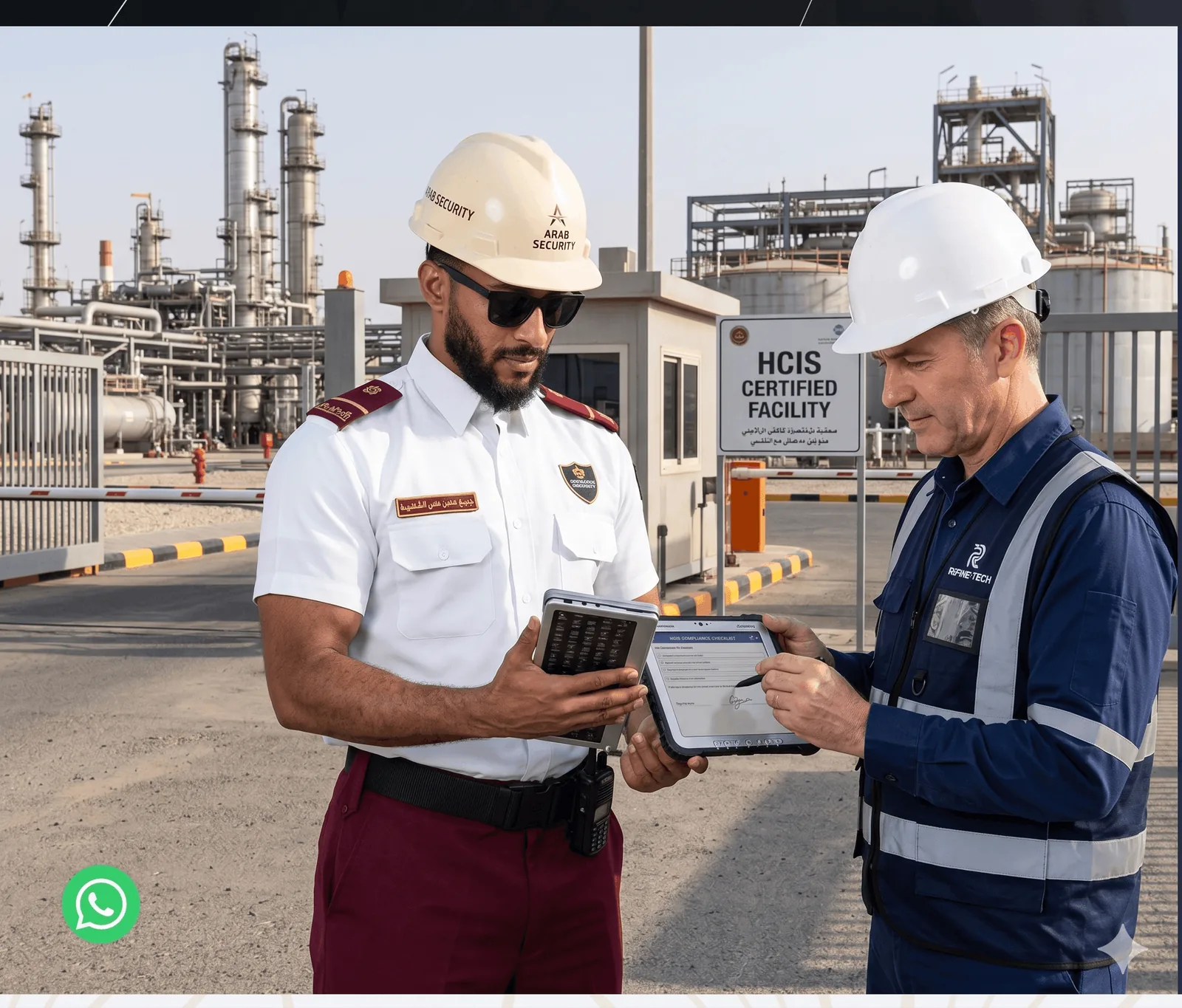
Energy assets are guarded badly across the Kingdom for one reason: they are treated as large industrial sites. They are not. On a refinery, a power plant or a desalination facility, the thing you are protecting is continuity of operation — and almost nothing that threatens it looks like a theft.
Nobody steals a distillation column. What actually costs money on an energy asset:
Set against those, copper theft is a rounding error. Yet most security proposals for energy sites are written as though the threat is a man with bolt cutters.
This is the point that separates a provider who understands energy from one who does not.
On a live process facility, an unauthorised person is not primarily a theft risk. They are a hazard — to themselves, to the plant, and to everyone downwind. A contractor who skipped induction, a visitor who took a shortcut through a live area, a worker without the correct PPE for that zone: these are the incidents that trigger investigations and stop production.
A guard trained on a commercial gate will not recognise any of it. A guard trained for a process environment knows which zone requires which PPE, knows that door is supposed to be interlocked, and knows that an unfamiliar smell is something you escalate rather than ignore.
He is frequently the only person continuously watching who goes where. That is worth considerably more than his deterrent value.
Full HCIS territory — access control, permits, auditable logs, documented escalation. The constraint that catches projects out is permit lead time: clearance for guards themselves takes weeks, and no amount of urgency compresses it. Plan it into the schedule.
Generation sites are conventional controlled facilities. Transmission is not — substations are dispersed, unmanned, and remote, and guarding each one is uneconomic. This is patrol and alarm response territory, not static posts.
Among the most critical assets in the Kingdom, and treated with less security seriousness than a shopping mall. Continuity is everything; the consequence of interruption is measured in population, not riyals.
A utility-scale solar farm is a genuinely novel security problem: enormous perimeter, negligible density, and high-value, portable, resaleable components spread thinly across the desert.
You cannot guard it with posts — the arithmetic does not work at any headcount. What is stolen is cable and panels, quietly, from the far edge, over weekends. And the loss is not the panel: it is the generation lost while a section sits dead and nobody notices, because nobody is walking the array.
The model is randomised patrol across the array with static cover on the substation, inverter stations and stores — where the value concentrates. Same logic as linear infrastructure.
Energy assets run on contractors — during turnarounds, hundreds of them, rotating weekly. This is where the access control actually fails.
"New man from the mechanical sub" is the easiest cover story on any plant in the Kingdom, because it is usually true and almost never verified. Verification requires a live roster, a guard who checks it every time, and an operator who backs him when a superintendent objects. Without the third, the first two are theatre.
On a manufacturing site the loss is usually property. On an energy asset the loss is continuity — an unplanned shutdown costs more per day than the annual security budget, and a safety incident triggered by someone in the wrong zone stops production entirely. Copper theft is a rounding error by comparison, yet most proposals are written as though it is the main threat.
Because an unauthorised person on a live process facility is a hazard before they are a thief — to themselves, the plant, and everyone downwind. The guard is frequently the only person continuously watching who goes where. A guard trained on a commercial gate will not recognise a PPE breach, an interlocked door left open, or a smell that should be escalated.
Not with static posts — the arithmetic fails at any headcount, because the perimeter is enormous and the density is negligible. Randomised patrol across the array with static cover on the substation, inverter stations and component stores, where value concentrates. What gets stolen is cable and panels, from the far edge, over weekends — and the real loss is the generation lost while a dead section goes unnoticed.
Contractor verification during turnarounds, when hundreds of rotating personnel are on site. 'New man from the mechanical sub' is the easiest cover story on any plant in the Kingdom because it is usually true and almost never checked. Verification needs a live roster, a guard who checks it, and an operator who backs him when a superintendent objects.
Weeks, not days — and no amount of urgency compresses it. Permit and vetting lead time for the guards themselves is the constraint that most often catches projects out. Plan it into the schedule rather than discovering it the week before startup.
Tell us about your site and we will scope it honestly — including telling you if you need less than you think.