
Your cameras are already recording. The question is whether anyone is watching — and whether they would notice.
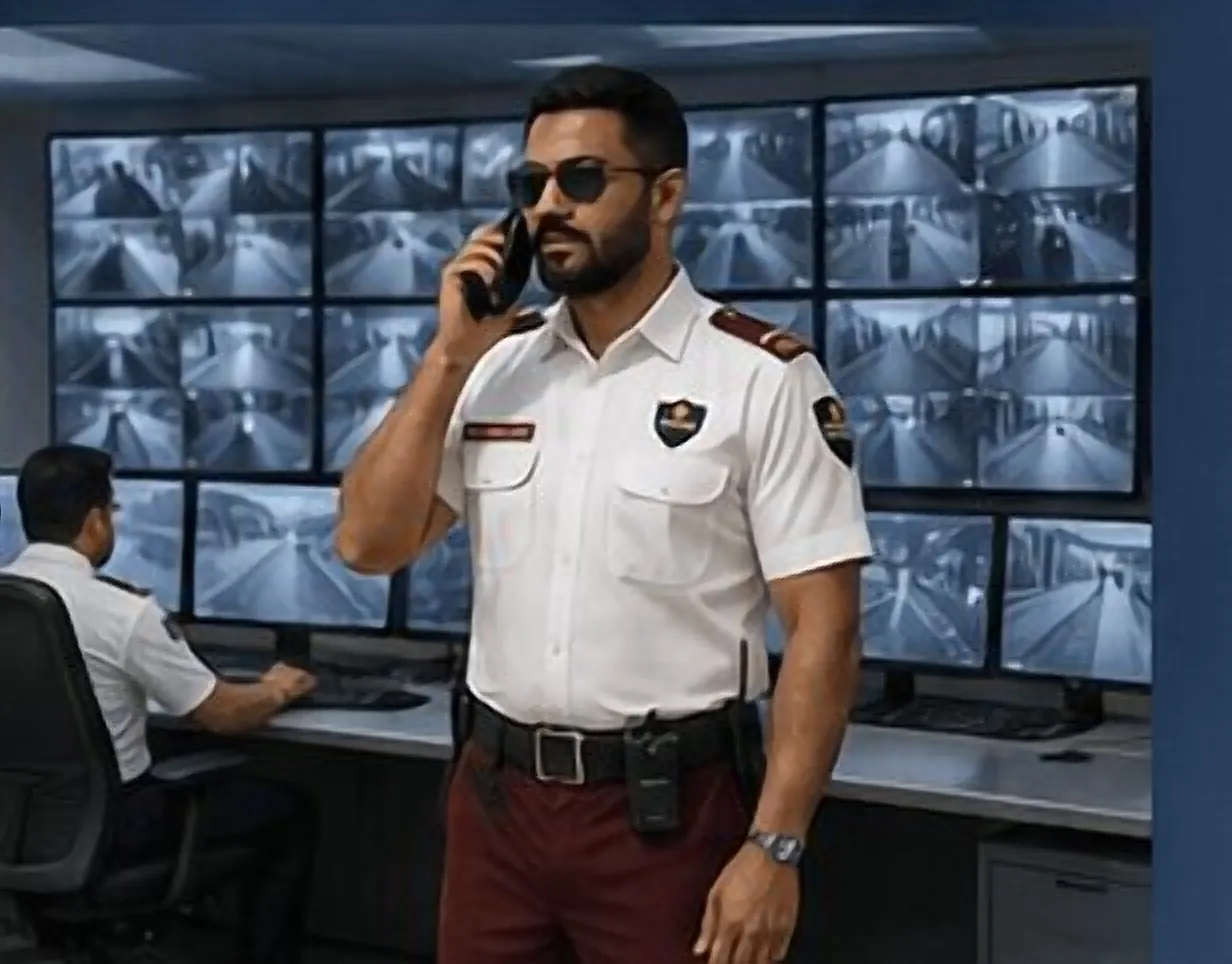
Almost every facility in the Kingdom has cameras. Very few have anyone watching them. The result is a security system that works perfectly in reverse: it tells you, in high definition, exactly how you were robbed last Tuesday.
An unmonitored camera is a forensic tool. It produces evidence after a loss. That has value — for insurance, for investigation, for dismissal — but it prevents nothing.
A monitored camera is a detection tool. Someone sees the perimeter breach while it is happening, and a response begins in minutes rather than at the next stocktake.
The gap between these two is not equipment. It is a person. And the uncomfortable truth is that most facilities have spent heavily on the first and nothing on the second, then wondered why the cameras "didn't work".
Here is the finding that responsible providers do not hide from clients: a human watching a bank of static monitors loses meaningful detection ability after roughly twenty minutes. This is well documented and it is not a character flaw. Attention to low-event visual monitoring simply decays.
Which means a single operator staring at 32 screens for an eight-hour shift is, for most of that shift, providing a comfortable illusion. Any provider who sells you that without mentioning it is either uninformed or hoping you are.
Monitoring and guarding are not alternatives — they are a system. The operator sees; the guard acts. A control room with no one to dispatch is watching a crime happen. Guards with no overview are working blind.
If you are weighing one against the other, our guards vs CCTV comparison sets out the trade-offs honestly, including the cases where cameras alone are the right answer and you should not be buying guards at all.
We supply operators, not camera systems. We are not selling you hardware, and we have no reason to tell you that you need more of it. If your existing system has blind spots, poor lighting or cameras pointed at nothing useful, an operator will find that out in week one — and we will tell you rather than quietly monitor a wall of useless footage.
No. We supply trained control room operators, not hardware. That means we have no commercial reason to tell you that you need more cameras. If your existing system has blind spots or poorly positioned cameras, our operator will identify it and report it honestly.
Fewer than most providers claim. Human attention to low-event visual monitoring decays significantly after around twenty minutes, so meaningful monitoring depends on rotation, structured view schedules and alarm-driven attention rather than one person staring at a wall of screens. Any provider promising that one operator can meaningfully watch 60 cameras is describing a receptionist.
It solves a different problem. Cameras detect; guards intervene. A control room with nobody to dispatch is watching a crime happen. For large perimeters, monitoring paired with mobile patrol is often more cost-effective than static guarding — but it is a system, not a substitute.
Most alarm activations are false — wind, animals, faults. After enough false alarms, people stop responding, and then the real one is treated like the rest. An operator verifies whether an activation is genuine before a response is dispatched, which is what keeps the response credible.
Yes, and this is where monitored CCTV earns its cost. The operator has an overview that a patrolling guard does not, and can direct them to the right location while an incident is still developing.
Tell us about your site and we will come back with a realistic scope — including if the answer is that you need less than you think.