
A warehouse protects goods at rest. Logistics protects goods in motion — and almost everything that goes missing leaves with someone who was supposed to be there.
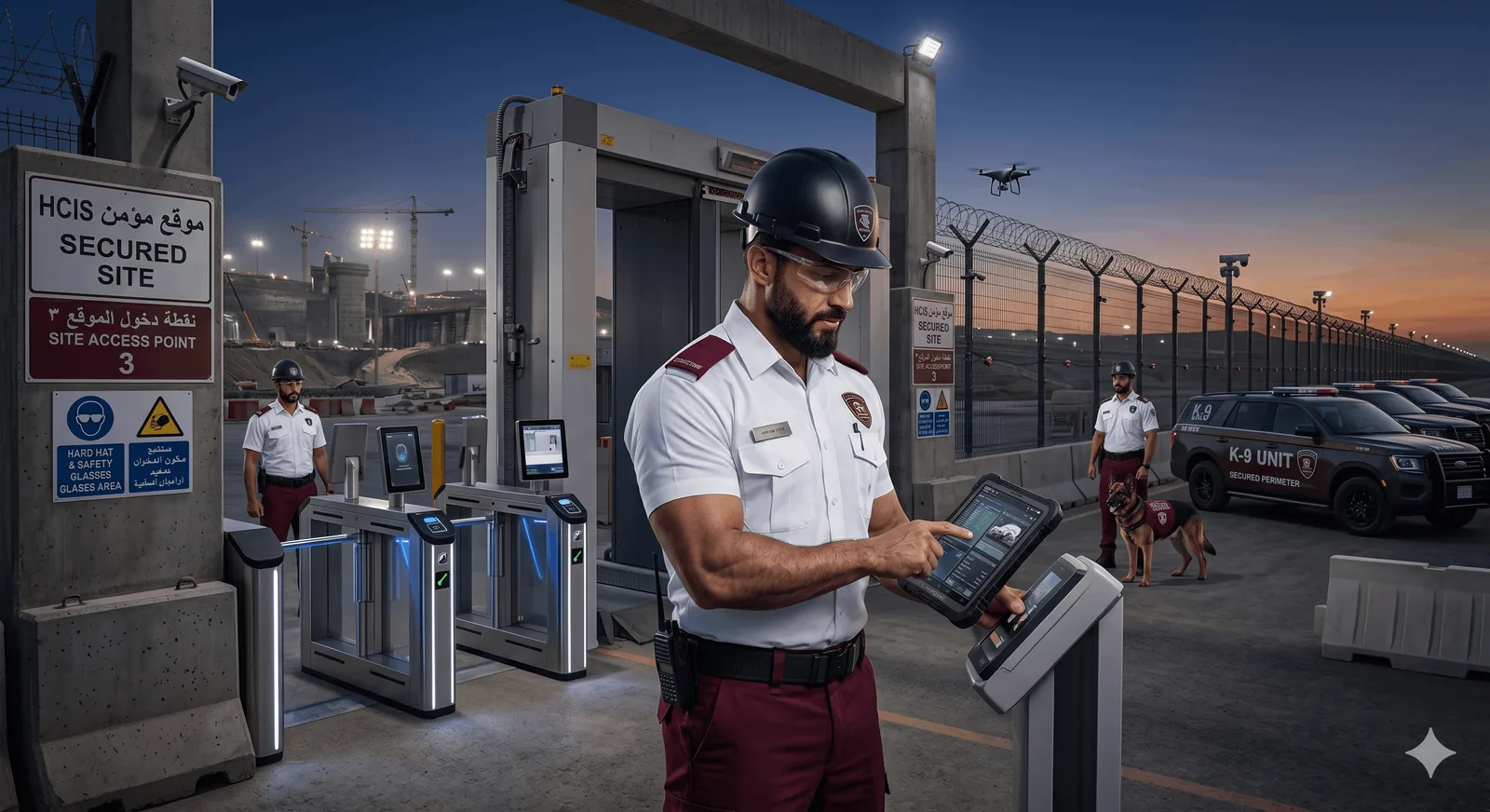
Logistics loss in the Kingdom is not a break-in problem. It is a paperwork and personnel problem, and it is almost entirely invisible until reconciliation.
A warehouse holds inventory in a controlled space you can fence and gate. Logistics is the opposite: goods are constantly changing custody, and every handover is an opportunity.
The exposures are handover points, not perimeters:
Fencing the yard does nothing about any of these.
Verifying container and trailer seals on arrival and departure — recording the number, confirming it matches the documentation, photographing discrepancies — takes a guard about ninety seconds.
It is also the single most effective loss control in the entire sector, and the overwhelming majority of Saudi facilities do not do it properly. A seal that is checked only "when something looks wrong" is not a control; it is a formality.
High-volume, heavily regulated, and dominated by driver and vehicle control. The guard's function at a port gate is verification at scale, under time pressure, from people who are paid by the trip and want to be gone. That combination is exactly what makes it fail.
Ports also concentrate the insider problem: the value of knowing which container holds what is enormous, and that knowledge sits with people who work there. Guard rotation and supervision matter more here than in almost any other setting. See Jeddah, Dammam, Jubail, Jazan.
The e-commerce build-out has created a category of facility with extremely high throughput and very short dwell time — goods arrive and leave the same day. Traditional inventory security assumes things sit still long enough to be counted. Here they do not.
The control has to move to the dock and the outbound gate: physical presence during load-out, spot verification against the manifest, and logging what actually leaves.
Rail freight and passenger corridors — including the Haramain line — present the infrastructure problem: you cannot fence a railway. The asset is linear, the access points are many, and static guarding is economically impossible.
What works: static cover at stations, depots and yards, where value and people concentrate; randomised patrol along the accessible corridor sections; and honest acknowledgement that the rest is not, and cannot be, continuously guarded.
A meaningful share of logistics loss involves someone who works there, or someone who knows the schedule from someone who does. Uniformed guards at the perimeter do very little about it.
What does: presence at the outbound gate, seal verification, driver control, and guards who report patterns rather than incidents — the same truck on the same route with the same discrepancy, three weeks running.
And a warning: high guard turnover is especially damaging here, because the loss is detected by people who know what normal looks like. Ask any provider their turnover rate.
We do not provide cash-in-transit or armed escort of valuables. That is a separately regulated activity, and any provider offering it as an add-on to a standard guarding contract should be asked to produce the specific authorisation for it. Most cannot.
A warehouse protects goods at rest in a space you can fence and gate. Logistics protects goods in motion, where custody changes constantly and every handover is an opportunity. The exposures are the dock, the driver, the seal and the manifest — not the perimeter. Fencing the yard addresses none of them.
Seal verification on arrival and departure — recording the number, confirming it matches documentation, photographing discrepancies. It takes about ninety seconds and most Saudi facilities do not do it properly. A seal checked only when something already looks wrong is a formality, not a control.
You cannot fence a railway, so static guarding is economically impossible along the line. Static cover goes where value and people concentrate — stations, depots, yards — with randomised patrol on accessible corridor sections, and honest acknowledgement that the remainder is not continuously guarded. Any provider claiming otherwise is selling you a fiction.
No. A meaningful share involves someone who works there, or someone who knows the schedule from someone who does. Perimeter guards do little about it. What helps is presence at the outbound gate, seal and driver control, and guards who report patterns rather than isolated incidents.
No. Armed transport of cash and valuables is separately regulated. Any provider offering it as an add-on to a standard guarding contract should be asked to produce the specific authorisation permitting it — most cannot.
Tell us about your site and we will scope it honestly — including telling you if you need less than you think.