
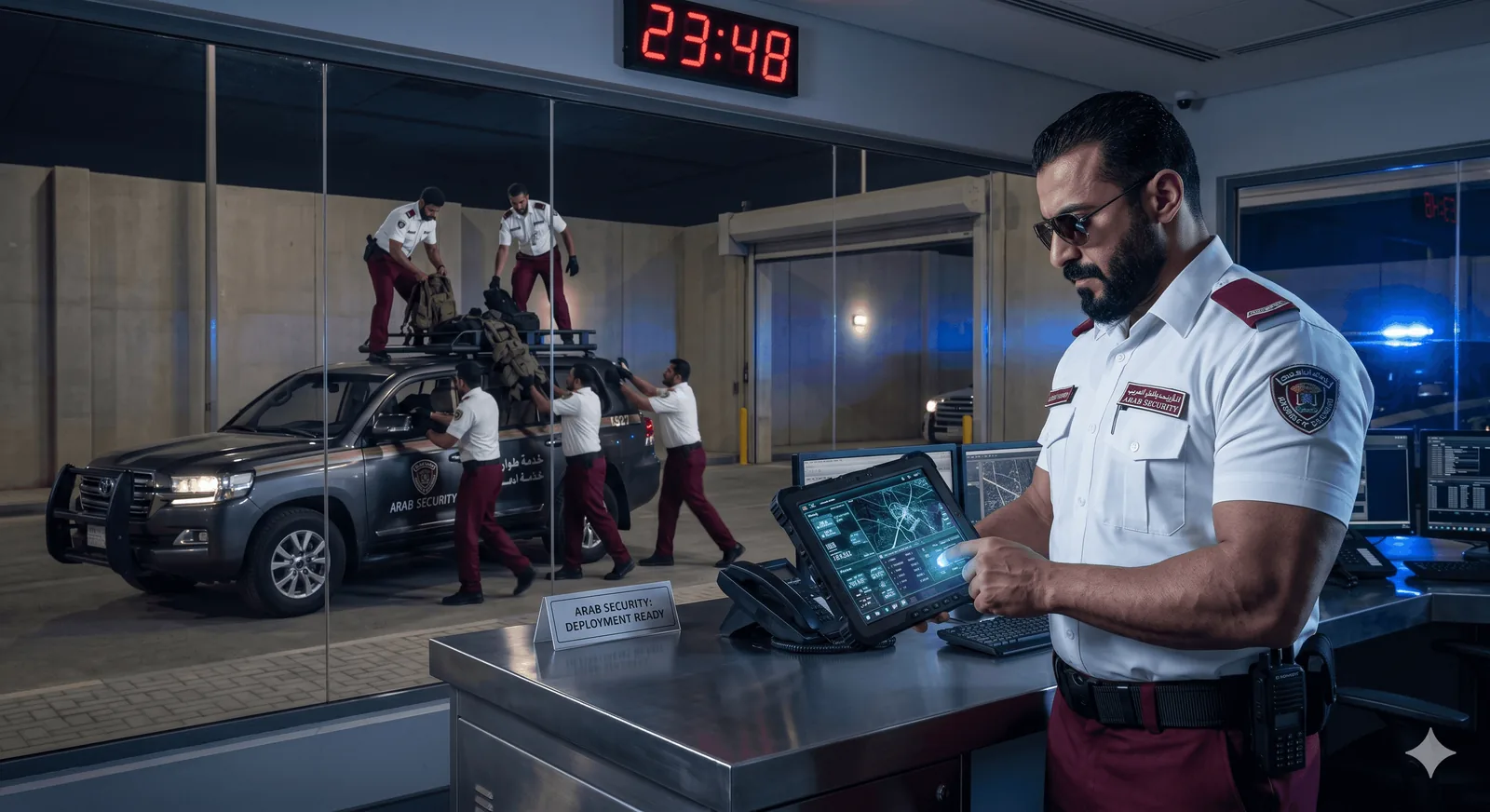
The first ten minutes, before anyone official arrives
Emergency response is not a separate service you buy. It is what your existing guards do in the window between an incident starting and the authorities arriving — and that window is usually the whole ballgame.
What the guard is actually for in those minutes
- Raising the alarm correctly — the right number, with the right information. "Come quickly" wastes the call.
- Containment — keeping people away from the fire, the spill, the collapse.
- Evacuation support — routes, marshalling, headcount at the assembly point.
- Preserving the scene — so an investigation is possible afterwards.
- Meeting and directing responders — an ambulance crew that cannot find the right entrance is losing minutes that matter.
- First aid, within the limits of training.
The most valuable thing on the site is a phone number
Not the guard's courage. His call list.
Who does he ring first? Who authorises evacuation? Who talks to the authorities? Who calls the client's management, and at what threshold?
Most sites have never written this down. So in the actual emergency the guard hesitates — reasonably — and the first critical minutes are spent working out who to wake up. Written escalation is the cheapest security improvement available to you, and almost nobody buys it.
What a guard is not
He is not a firefighter, a paramedic, or a police officer. He does not enter a burning building, tackle an armed intruder, or detain anyone. A provider who implies otherwise is selling you a liability. His job is to raise, contain, direct, and document — and done properly, that saves more than heroics.
The drill nobody runs
When did your guards last rehearse the evacuation route with your staff? If the answer is never, the plan is a document, not a capability. We will run it with you.