
Residential compound security in Saudi Arabia is a distinct discipline — covering gate access control, female guard requirements, mobile patrol, and visitor management in a community living environment. This guide covers what compound management companies and facility managers need to know.
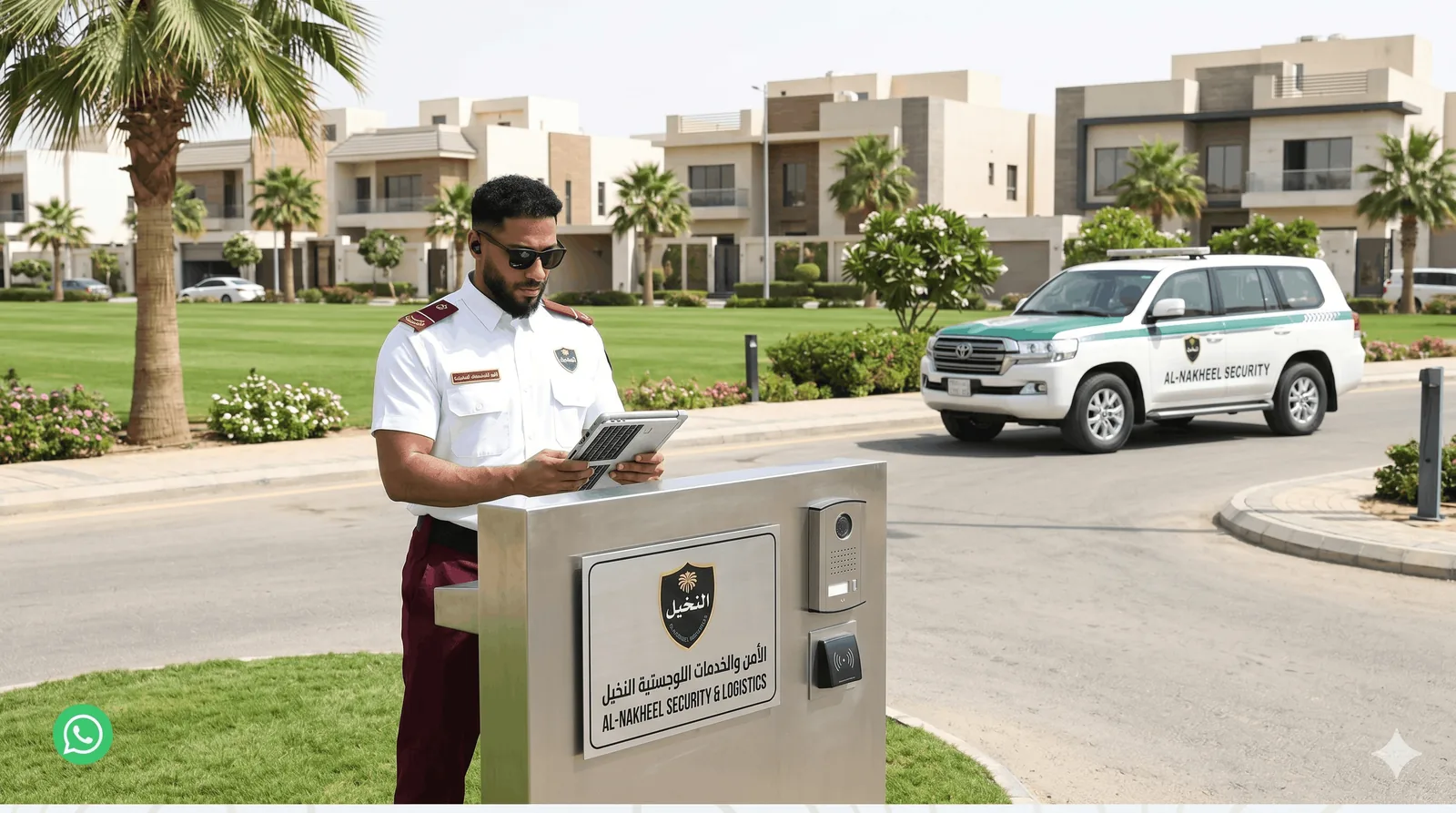
🏘️ Key Facts: Compound Security in Saudi Arabia
Security in Saudi residential compounds — particularly expatriate compounds in Riyadh, Jeddah, and Dammam — is a distinct security discipline. Compound security differs from commercial security in two fundamental ways: the client is the compound management company (not an individual resident), and the brief combines access control, resident safety assurance, and visitor management in a community living environment.
Effective compound security starts at the gate. Visitor management in Saudi residential compounds involves: verifying visitor identity against a resident-approved visitor list, recording vehicle details, issuing temporary access passes, and conducting respectful but thorough bag and vehicle checks for high-security compounds. Guards must be trained in the cultural sensitivity required for this role — they regularly interact with families, female visitors, and diplomatic personnel.
Gate security at residential compounds in Saudi Arabia is not simply checking IDs. In the post-2003 period — following the Riyadh compound bombings — compound security was overhauled across the Kingdom. The standards established then, and subsequently embedded in MOI guidance for residential compound operators, set requirements around: vehicle inspection protocols, visitor identity verification and logging, guard post equipment (barrier gates, CCTV covering all entry points), and emergency lockdown procedures.
Compound management companies that contract security through Arab Security Guard Services receive guards who are briefed on these protocols as a baseline — not as an optional feature. Gate guards are trained in barrier management, visitor dispute resolution, and emergency communication procedures.
Most residential compounds above 50 villas or apartment units operate a mobile patrol in addition to gate security. The patrol role covers: perimeter checks (walking or vehicle-based), pool and recreation area oversight during evening hours, lighting fault identification, and monitoring of service entrances. Mobile patrol in a residential compound requires a different temperament to commercial patrol — guards interact with residents, children, and domestic workers in a community environment, which requires a balance of vigilance and approachability.
Residential compounds in Saudi Arabia frequently require female security officers. The primary roles are: gate officer for the women's entrance or female visitor reception area, security escort for female residents accessing the compound perimeter during late hours, and patrol of women-only areas (women's gym, pool area). Larger compounds in Riyadh and Jeddah — including those housing embassy and diplomatic personnel — typically have a permanent female guard on each shift. Arab Security Guard Services provides trained female security officers for all compound security contexts.
Labour camps and workforce accommodation compounds for construction or industrial workers are a separate category from residential expat compounds. Security at workforce accommodation sites has different priorities: perimeter control to prevent unauthorised exit or entry, access control for site contractor vehicles, curfew management in some project environments, and incident response for inter-resident disputes. HCIS-compliant guards may be required at workforce accommodation for industrial project workers. Arab Security Guard Services provides security for both residential expat compounds and workforce accommodation sites — and can advise on which guard specification applies to your compound type.
The recommended structure for residential compound security in Saudi Arabia: a base contract covering 24/7 gate manned guarding (minimum 2 guards per gate shift for compound sizes above 30 units), mobile patrol (minimum 2 rounds per shift in a walking patrol or 4 rounds per shift in a vehicle patrol for larger perimeters), and female guard allocation (minimum 1 per shift if female-only areas are operational). Contracts should also specify supervisor site checks — monthly at a minimum, weekly for higher-security compounds — and provide monthly incident logs to compound management. See our compound security services page for full service details.
Need Security Guards for a Residential Compound?
Contact us on WhatsApp with your compound size, location, and current guard setup for a tailored proposal.
WhatsApp for a QuoteResponse within 2 hours · No obligation · Nationwide KSA
Tell us about your site and we will come back with a realistic scope — including telling you if you need less than you think.