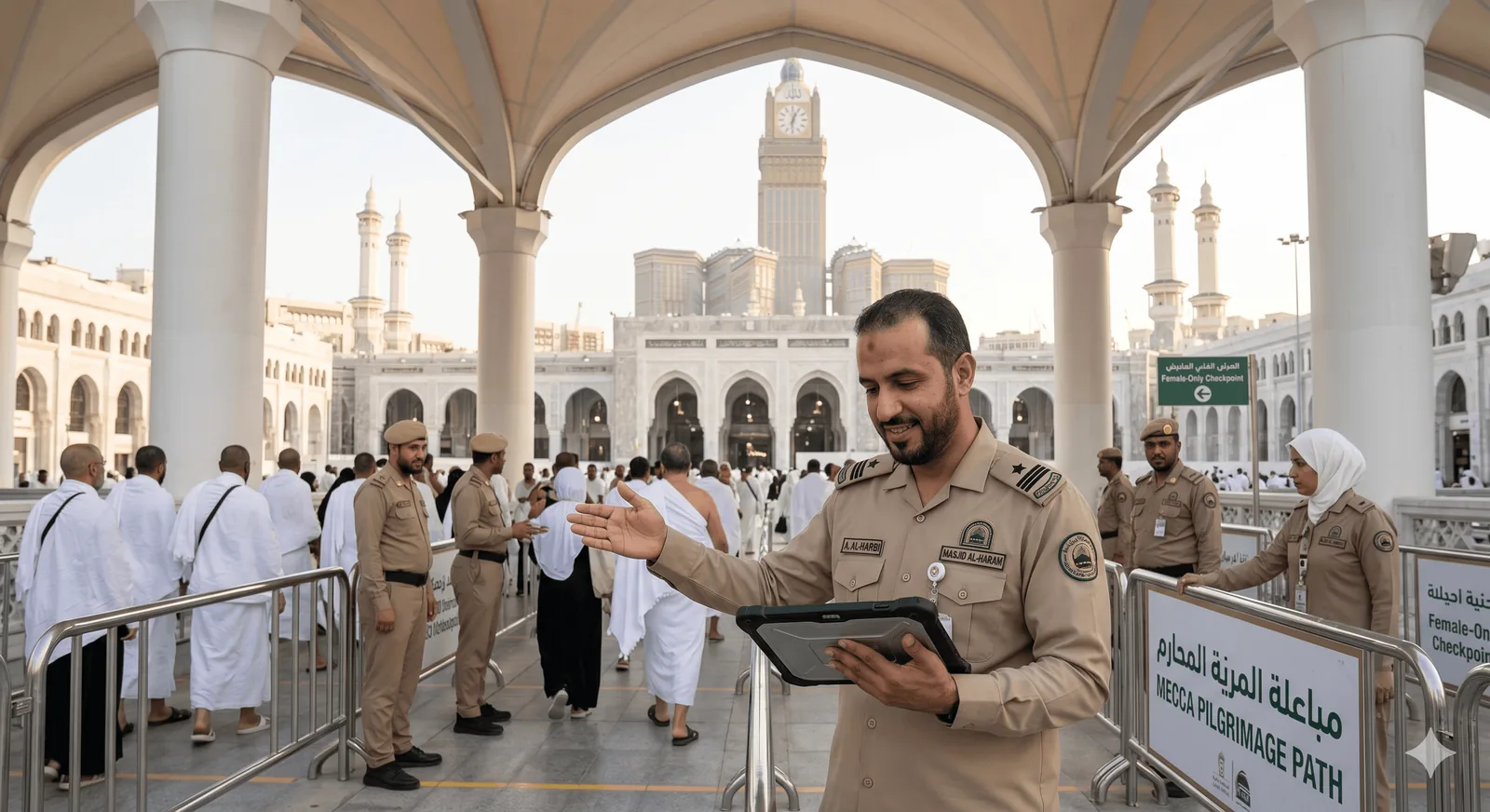
Hajj is the world's largest annual gathering — over 2 million pilgrims in Mecca in the span of just 5 days, with millions more arriving in the weeks prior. For businesses operating in the Haram zone and surrounding areas, the security challenges are unlike anything encountered during the rest of the year. This guide provides practical planning advice for operators who need to be ready.
Why Hajj Security Planning Is Different
The scale of Hajj creates compressed security challenges that don't apply in normal operations:
- Volume: Your premises may serve 10–20x their normal daily footfall in a single day
- Demographics: An international crowd — often elderly, sometimes in poor health, frequently disoriented in an unfamiliar city
- Language: Pilgrims speak dozens of languages; your security team needs to communicate effectively
- Time pressure: Hajj rituals follow a precise calendar. Missing a ritual is spiritually significant — pilgrims may behave urgently or unpredictably near ritual timeframes
- Regulatory scrutiny: Saudi authorities maintain heightened enforcement during Hajj. Non-compliant security arrangements are more likely to attract attention
When to Start Hajj Security Planning
The single most common mistake businesses in Mecca make is starting security planning too late. Our recommended timeline:
- 3–4 months before Hajj: Confirm security provider, initial site assessment, rough headcount planning
- 6–8 weeks before Hajj: Finalise guard numbers, shift structure, post assignments. Late bookings risk unavailability — Mecca guard capacity is limited
- 3–4 weeks before Hajj: Site-specific briefings, access control setup, emergency procedure rehearsal
- 1–2 weeks before Hajj: Full guard deployment, familiarisation shifts, communications testing
Key Security Requirements for Hajj Season
1. Access Control
Hotels, malls, and hospitality facilities near the Haram need rigorous access control during Hajj. Physical crowding at entrances is a serious risk. Trained access control guards — not just receptionists — should manage entry points with clear queue management systems.
2. Crowd Management
Crowd management is a specialised skill. Guards trained only in static security may be ineffective — or make situations worse — in high-density crowd environments. Specify crowd management trained guards explicitly when booking.
3. Female Security Officers
For any facility with ladies-only sections, segregated floors, or female-majority guest populations, female security officers are not optional during Hajj. Saudi regulatory requirements for gender-segregated security are strictly enforced. See our female security officers page for officer availability.
4. Bilingual Guards
During Hajj, Arabic alone is insufficient. English is widely useful, but pilgrims come from Urdu, Malay, Indonesian, Turkish, and French-speaking communities in large numbers. At minimum, ensure your supervising guard team has strong English alongside Arabic.
5. Emergency Procedures
Every security post needs a clear, rehearsed emergency procedure. Medical incidents are more common during Hajj than any other time. Guards should be first-aid trained and know exactly how to summon Saudi Civil Defence quickly.
Selecting a Security Provider for Hajj Season
Ask any potential provider these questions before booking:
- Have you deployed security in Mecca or Medina during Hajj season before?
- Can you provide female security officers?
- Do your guards have crowd management training?
- What language capabilities does your team have?
- Are you MOI licensed and Nitaqat compliant?
- What is your emergency escalation procedure?